
Why AI Readiness Starts With the Data Behind Your Business
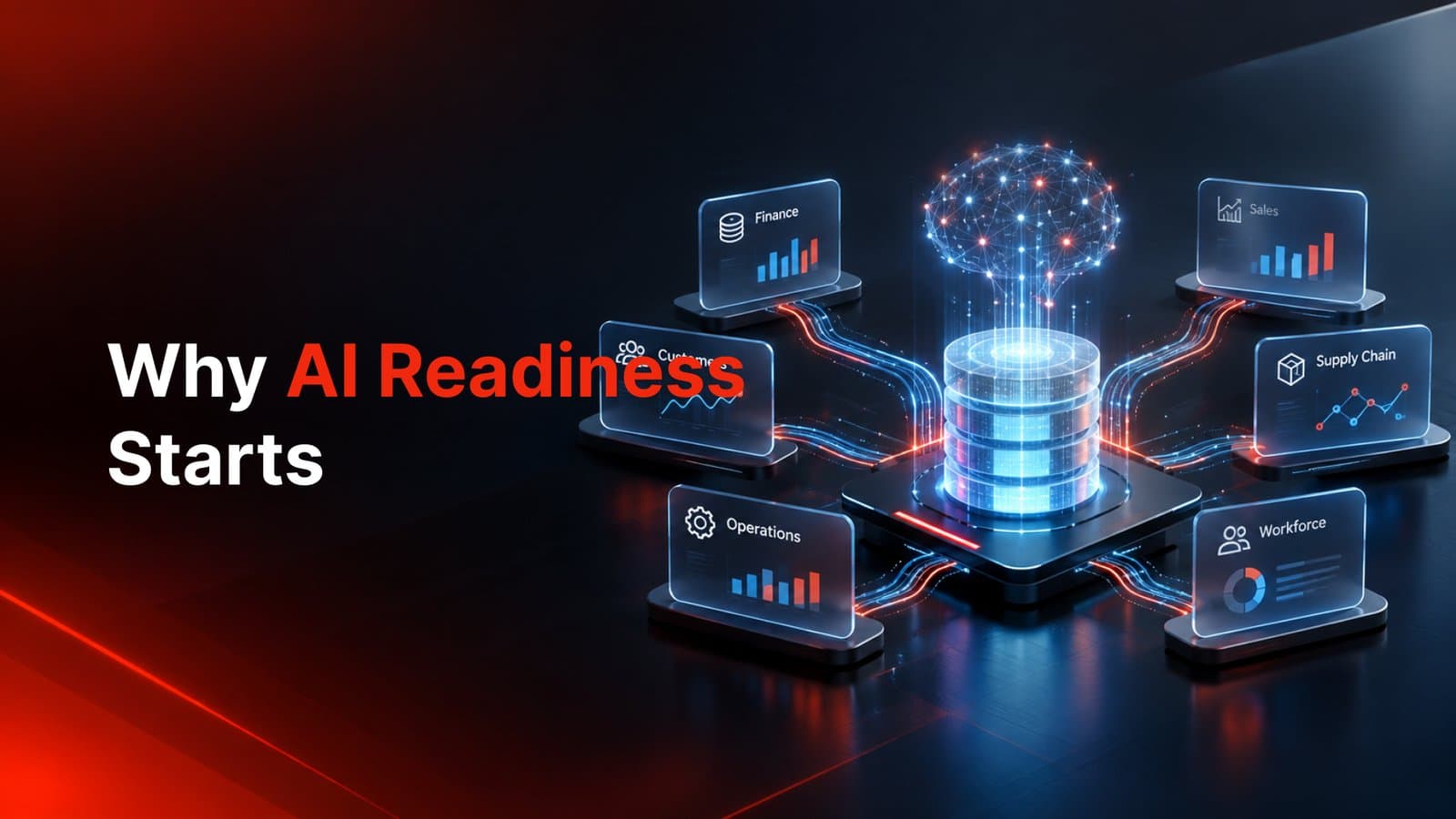
A business wants to use AI to forecast demand, automate repetitive work, or help employees find answers faster. The use case makes sense. The technology is available. The team starts testing.nThen the results don't quite match reality.nA forecast misses an obvious seasonal pattern. A chatbot gives an outdated answer because the documents behind it haven't been updated. A recommendation model performs well in testing but struggles when it starts working with live business data.nIn many cases, the model isn't the problem.nThe data underneath it isn't ready.nAI can only work with the information it can access, understand, and trust. That makes data readiness one of the most important — and most overlooked — parts of an AI strategy.n
When the AI Works but the Business Doesn't Trust It
AI projects often look straightforward at the beginning.nA team identifies a promising use case, selects a platform, and starts experimenting. The first demonstration may even look impressive.nThe problems tend to appear when the solution meets real business data.nCustomer records may exist in several systems. Operational information may be incomplete. Documents may contain outdated versions of the same information. Different departments may use different definitions for the same business term.nThe AI then produces an answer that technically follows its inputs but doesn't reflect what the business expects.nThat creates a bigger problem than one incorrect output.nPeople stop trusting the system.nEmployees begin checking AI-generated answers manually. Managers hesitate to use recommendations in important decisions. A promising pilot loses momentum, and future AI initiatives face greater skepticism because the organization remembers what happened the first time.nThe business may conclude that AI doesn't work, when the real issue was that the foundation wasn't ready for it.n
AI Exposes Problems That Were Already There
One reason AI readiness can be difficult is that many data problems remain hidden when data is used only for basic reporting.nA duplicate customer record might not cause an obvious issue in a monthly report. An inconsistent product description may go unnoticed when someone searches a spreadsheet manually. A missing field might have little impact on one application.nAI changes the expectations.nA model may need information from several systems at once. A generative AI assistant may need access to large volumes of internal documents. A predictive model may need historical data that is consistent enough to identify meaningful patterns.nSuddenly, gaps that were manageable become obstacles.nThis is why AI readiness isn't simply about adding an AI tool to the existing technology environment. It requires understanding whether the underlying data can support the use casen
What Makes Data AI-Ready?
There isn't one universal checklist. The right requirements depend on what the business wants AI to do.nBut several questions should be answered before scaling an initiative.nCan the right data be accessed?nRelevant information may be spread across CRM, ERP, databases, documents, applications, and spreadsheets. If an AI system can't access the information it needs, its capabilities are limited from the beginning.nIs the data reliable?nDuplicates, missing values, outdated records, and inconsistent formats can affect AI outputs just as they affect traditional analytics.nDoes the business agree on what the data means?nAn AI system can't resolve fundamental disagreements about definitions. If one team defines an active customer differently from another, the underlying problem needs to be addressed before expecting AI to produce a consistent answer.nIs there clear ownership?nSomeone needs to be responsible for important datasets, including their accuracy, definitions, access, and ongoing maintenance.nCan the data foundation support the next use case?nThe goal isn't to prepare data for one isolated experiment and start again from scratch. A good foundation should make future AI and analytics initiatives easier to build.n
Start With the Use Case, Not a Massive Data Project
AI readiness doesn't mean cleaning every dataset in the organization before doing anything with AI.nThat approach can take years.nA more practical starting point is to work backward from a specific business use case.nWhat information would the AI need? Where does that information currently live? How reliable is it? How frequently does it change? Who owns it? What needs to happen before the AI can use it safely?nThose questions reveal the most important gaps without turning AI readiness into an enormous technology program.nIf the first use case depends on customer data, start there. If it depends on internal knowledge, focus on the documents and information employees actually need. If it involves forecasting, examine the historical and operational data that will influence the prediction.nThis creates a more focused path from data assessment → preparation → AI use case → measurable outcome.nAnd when the first use case succeeds, the same foundation can support what comes next.n
Build the Foundation Into the AI Journey
Technology can make the groundwork much more manageable.nCloud data platforms can bring information together from disconnected systems and provide a scalable foundation for analytics and AI. Data integration pipelines can keep information flowing automatically rather than relying on periodic exports.nData quality tools can identify duplicates, missing values, and inconsistencies across large datasets. Governance capabilities can establish rules around ownership, access, and how sensitive information is used.nOnce that foundation is in place, AI tools can work with information that is more current, consistent, and accessible.nThis also changes the economics of future AI initiatives.nInstead of preparing data from scratch every time a new use case appears, the business has an increasingly reusable data foundation that new applications can build on.n
Readiness Also Means Responsible Access
Getting data ready for AI isn't only a quality exercise.nThe more information AI can access, the more important security, governance, and compliance become.nSensitive customer information, financial records, employee data, and confidential business documents may all be relevant to AI use cases. Businesses need to know who can access that information, how it is being used, and what controls are in place.nThat means AI readiness should consider security and governance alongside data quality, rather than treating them as issues to solve after deployment.nA technically capable AI system isn't enough if the business cannot confidently control the information it uses.n
The Real Goal of AI Readiness
The goal isn't to create perfect data.
It is to create a data environment that is reliable enough, accessible enough, governed enough, and scalable enough for the AI use cases that matter to the business.
That means:
- Connecting the data that matters.
- Improving quality where it affects the intended use case.
- Establishing clear ownership and definitions.
- Keeping important information current.
- Protecting sensitive data with appropriate governance.
- Building a foundation that can support future AI initiatives.
When those pieces are in place, AI becomes much easier to move from experimentation into real business use.
Conclusion
AI readiness starts well before an AI model is deployed.nBusinesses that invest in the data underneath their AI initiatives are better positioned to produce results people can actually trust. They can move from promising demonstrations to solutions that work with real business information, real processes, and real decisions.nThe payoff isn't limited to one successful AI project. A stronger data foundation makes the next AI use case easier to build, easier to govern, and easier for the business to adopt.n
Athen helps businesses assess and strengthen the data foundations behind their AI initiatives — connecting data, improving readiness, and establishing the governance needed to move from AI experimentation to trusted business outcomes.