
Why Cloud Security and Governance Become Harder at Scale
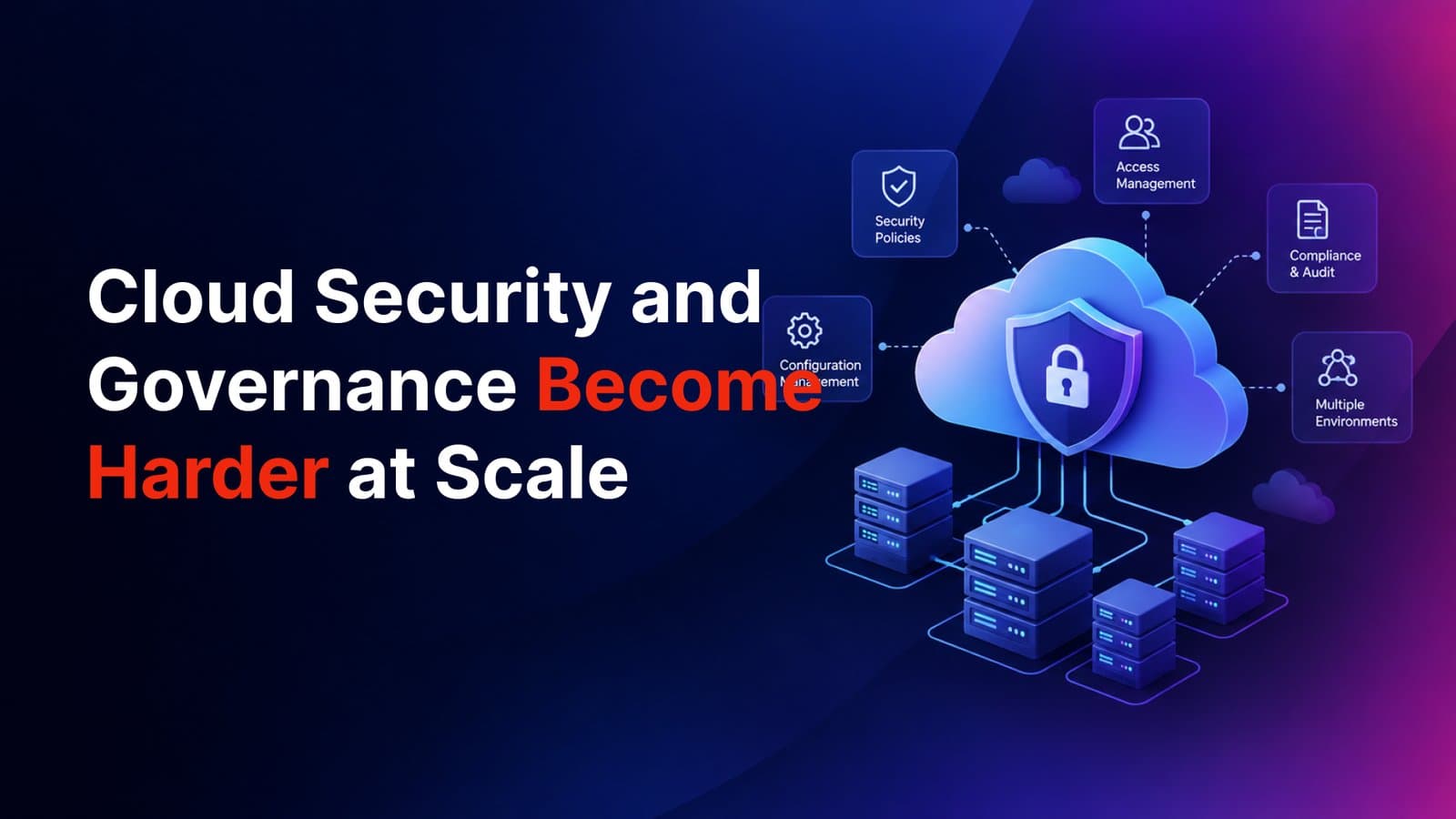

A small cloud environment is relatively easy to keep under control. A few accounts, a handful of applications, and one team making most of the decisions can often be managed with informal processes. That changes quickly as the business grows. More teams provision resources. More applications connect to business systems. More users need access. Different accounts and environments begin to develop their own settings and practices. What once worked through knowledge and manual checks starts creating gaps that are difficult to see. The challenge isn't that cloud becomes less secure as it grows. The challenge is that security and governance have to keep pace with everything else that is growing around it.
The Business Challenge
Cloud growth often happens faster than governance. A developer opens access to a storage resource to get testing finished and forgets to change it later. A contractor receives broader permissions for a short-term project and those permissions remain after the project ends. A business unit adopts a new SaaS application without involving the central IT or security team because getting started independently is faster. None of these decisions necessarily creates an immediate problem. The difficulty comes when similar decisions happen across dozens of teams and hundreds of resources. Security teams can lose visibility into who has access to what. IT may struggle to maintain consistent configurations across different environments. Compliance teams may have to reconstruct evidence manually when an audit arrives. As the environment becomes larger and more distributed, small governance gaps become harder to identify and more expensive to correct.
Where Governance Starts to Break Down
Several patterns tend to appear as cloud environments expand. Access grows faster than oversight. Users, contractors, applications, and services accumulate permissions that aren't always reviewed when circumstances change. Every team makes slightly different decisions. Without shared policies, accounts and resources can develop different security configurations and standards. Visibility becomes fragmented. Multiple subscriptions, accounts, regions, or cloud services make it difficult to maintain a complete picture of the environment. Manual checks stop scaling. A process that works when there are twenty resources becomes unreliable when there are thousands. Compliance becomes reactive. If security posture is reviewed mainly before an audit, problems can remain unnoticed for months. These aren't unusual failures. They're what happens when the environment grows faster than the processes responsible for managing it.
Building Governance Into Cloud Growth
The answer isn't to prevent teams from moving quickly. It's to make secure and compliant behaviour part of how they move quickly. Start with a clear view of the environment. Security and IT teams need to know what accounts, applications, resources, and data exist and who is responsible for them. Access should follow consistent principles, with permissions based on role and business need rather than convenience. Those permissions should also be reviewed as people, projects, and responsibilities change. New environments should be created with appropriate security policies already applied. This is more effective than discovering misconfigurations later through manual reviews. As the environment grows, automation becomes increasingly important. Security policies, configuration checks, and compliance monitoring can happen continuously rather than depending on someone remembering to perform a review.
The objective is simple: make the secure way of working the easiest way of working.
How Technology Can Help
Cloud platforms provide the capabilities needed to support this approach. Identity and access management can establish consistent rules for users, applications, and services. Centralized monitoring and logging can bring activity from different environments into a more complete security view. Policy-based controls can identify or prevent configurations that don't meet organizational standards, while automated compliance checks can continuously monitor the environment rather than waiting for the next audit. For organizations using Azure, these capabilities can be combined across the cloud environment to create stronger visibility, access control, and governance without requiring every team to manage security independently. The technology provides the foundation. The important work is defining the policies, ownership, and operating model that make those capabilities useful.
What Scales With the Business
Good cloud governance isn't about adding layers of approval to every decision. It's about creating controls that operate consistently while allowing teams to keep moving.
- Clear ownership — every account, application, and resource has someone responsible for it.
- Least-privilege access — people and systems receive only the access they actually need.
- Automated controls — policies and monitoring reduce dependence on manual checks.
- Continuous visibility — security teams can see changes and potential issues as they emerge.
- Audit readiness — compliance evidence and security posture are maintained continuously rather than reconstructed later.
When these practices are built into the environment, growth doesn't have to mean losing control.
Conclusion
Cloud security becomes difficult at scale when the environment grows faster than the governance around it .The answer isn't slower cloud adoption. It's creating an environment where identity, access, monitoring, policy, and compliance are built into everyday operations rather than added after problems appear. That gives businesses the freedom to keep scaling while maintaining a clearer view of their risk.
Businesses looking to strengthen cloud governance as they scale can work with Athen to build the security, visibility, and controls needed for a cloud environment that grows with confidence.