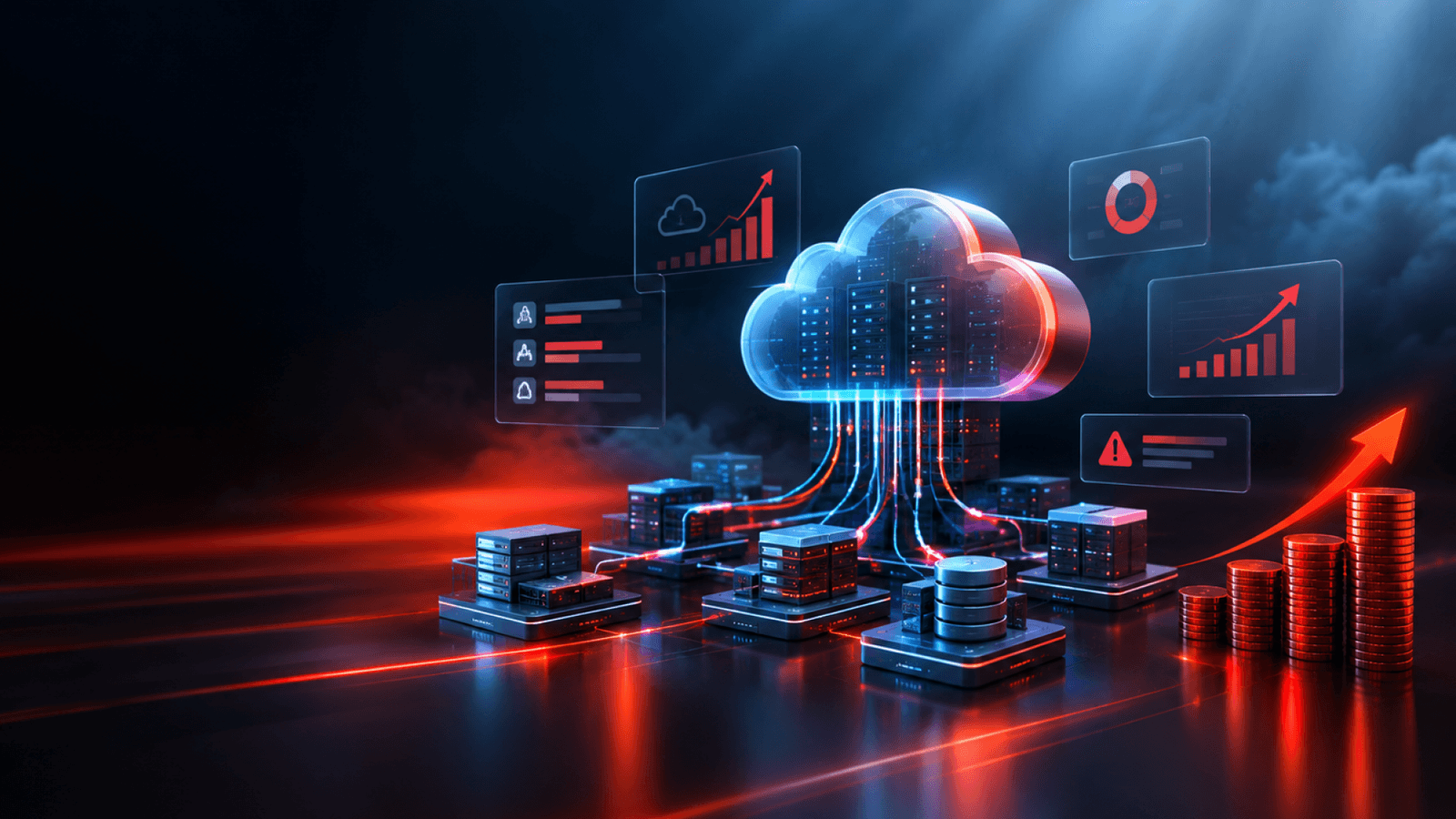
When Legacy Applications Start Holding Business Growth Back

The system has been running for years without a major failure, so nobody has questioned it. But every time the business tries to add a new product line, enter a new region, or connect a new tool, that same legacy application becomes the sticking point.nIt needs a workaround. A manual patch. Or a specialist who is one of the few people left who understands how it works.nIndividually, these moments seem manageable. Together, they point to a larger problem: the application that once supported the business has quietly become a constraint on where it can go next.n
When u201cStill Workingu201d Is No Longer Good Enough
Legacy applications rarely fail loudly. They usually continue doing what they were built to do, which is exactly why businesses keep them around.nThe problem appears when the business changes around them.nA new product may require capabilities the application was never designed to support. A new market may expose limitations in scalability or integration. A modern cloud service may be difficult to connect. Even routine changes can take longer because every modification carries the risk of affecting something else.nThere is another risk that is easy to overlook: knowledge.nThe people who know how the system works may be a very small group. Over time, maintaining that knowledge becomes increasingly difficult, creating a dependency that is operationally risky and expensive to manage.nThe result is not necessarily a broken system. It is a business that has started making decisions around the limitations of its technology.n
The Growth Tax of Legacy Technology
The impact becomes clearer when viewed through business growth rather than technology.nSlower innovationn New capabilities take longer to introduce because every change has to work around an older foundation.nHigher integration effortn Connecting modern applications to legacy platforms often requires custom development, additional middleware, or manual processes.nRising maintenance costsn Technical debt accumulates over time, making seemingly simple changes harder and more expensive.nOperational dependencyn Specialist knowledge becomes concentrated in a small number of people, increasing continuity risk.nLimited scalabilityn Systems designed for an earlier stage of the business may struggle with today's transaction volumes, users, locations, or processes.n
Modernization Doesn't Have to Mean Starting Again
Not every legacy application needs to be replaced.nSome can continue to serve their purpose with better integration, improved infrastructure, or targeted modernization. Others may need to be gradually replaced because their underlying architecture can no longer support the direction of the business.nA useful modernization strategy starts by identifying where the current system creates the greatest business constraint.n
That could be:
- An inability to integrate with newer applications
- Limited scalability
- Slow or unreliable performance
- Difficult access to business data
- Poor support for mobile or remote workflows
- High dependency on specialist knowledge
This creates a more practical path forward. Instead of treating modernization as one enormous technology project, businesses can address the capabilities that matter most first.
A Phased Path Forward
For many businesses, the safest approach is incremental.nAssess what needs to change.n Understand which parts of the application are genuinely limiting growth and which still provide value.nPrioritize business-critical capabilities.n Focus modernization efforts on the areas that directly affect customers, employees, scalability, or operational efficiency.nConnect before replacing where appropriate.n APIs and integration platforms can sometimes extend the usefulness of an existing system while newer capabilities are introduced around it.nModernize in stages.n Specific functions can move to modern platforms without forcing the business into a single high-risk migration.nProtect the data.n Historical and operational data often represents years of business knowledge. Migration needs to preserve its accuracy, accessibility, and governance.nThis approach gives the business room to modernize without treating every existing system as something that needs to disappear immediately.n
What Modern Technology Makes Possible
Cloud platforms can provide the scalability and flexibility that older infrastructure often lacks. APIs and integration services can connect legacy applications with modern business systems, allowing information to move without constant manual intervention.nModern applications can also take over specific functions incrementally. Instead of replacing an entire platform in one move, businesses can modernize the parts that create the most friction and gradually reduce their dependence on the older system.nData migration and governance capabilities are equally important. Moving applications without properly managing the data underneath them can simply transfer the old problems into a new environment.nThe goal isn't modernization for its own sake.n
It is creating an application environment that can support the business the organization is becoming.n
The Decision Isn't u201cReplace or Keepu201d
The most useful modernization decisions aren't binary.nAn application may be:nKeep — if it remains fit for purpose and doesn't constrain the business.nConnect — if integration is the main limitation and the underlying application remains valuable.nModernize — if specific capabilities need to be improved without replacing the whole platform.nReplace — if the system has become too restrictive, costly, or risky to support the business going forward.nThis creates a more balanced approach to application modernization. The objective isn't to have the newest technology everywhere. It's to make sure the technology landscape supports the business strategy.n
What to Consider Before Modernizing
Modernization needs to balance business ambition with operational reality.nBusiness continuity matters because critical systems cannot simply be switched off during transformation.nData integrity is essential when moving years of operational and historical information.nIntegration needs to be considered across the wider application landscape, not just within the system being modernized.nCost and value should be assessed over the life of the solution, including maintenance and future change.nChange management matters because modernization affects the people and processes built around the existing application.n
Conclusion
A legacy application doesn't have to fail before it becomes a problem. Sometimes the clearest warning is that every new business requirement requires another workaround.nThe right response isn't always replacement. It is understanding where the application is constraining the business and choosing the right path — connect, modernize, replace, or retain.nAthen helps businesses modernize applications and technology environments in a way that supports growth, integration, and long-term flexibility.n
Ready to move beyond the limitations of legacy applications? Talk to Athen about a practical modernization path for your business.