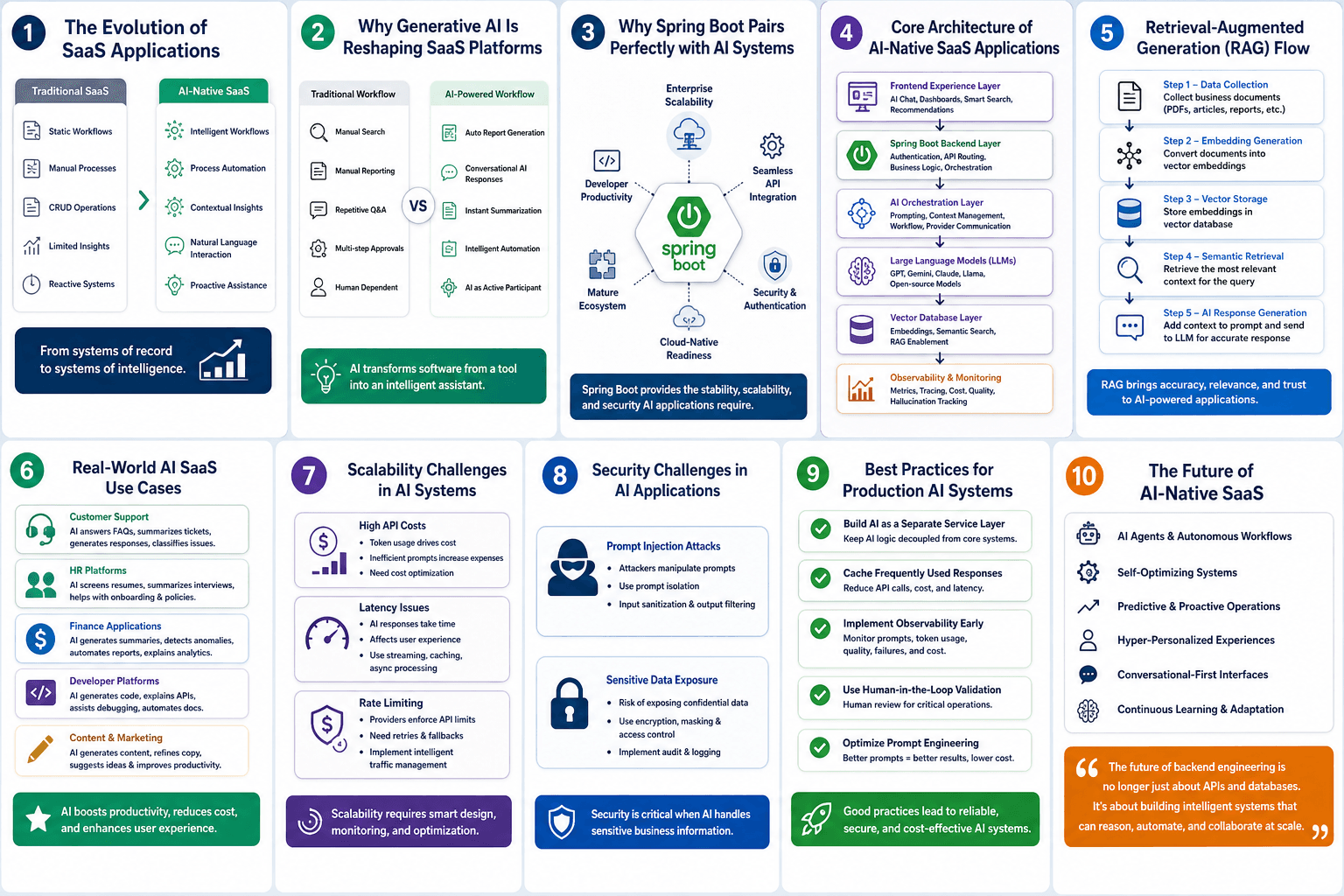
Gartner’s projection that half of all SaaS deals will include GenAI features by 2026 is not a prediction; it is a market mandate. We are witnessing a fundamental paradigm shift where generative AI is transitioning from a competitive differentiator to a baseline customer expectation.
For product leaders and SaaS companies, the critical question has evolved from “Should we invest in AI?” to “How do we integrate AI in a way that is deeply valuable, defensible, and central to our user experience?”
The Baseline Has Changed
Gartner forecasts that 40% of enterprise applications will include task-specific AI agents by the end of 2026, up from under 5% today.
By 2026, more than 80% of enterprises will have used a generative AI API or deployed GenAI-enabled applications into production.
While the oft-cited statistic “50% of SaaS deals will include GenAI features by 2026” may not appear verbatim in Gartner’s public releases, the direction is clear: GenAI-capability in SaaS is rapidly shifting from “nice-to-have” to “must-have”.
These signals show that customers and markets will begin to expect intelligence as part of the core product experience not as a bolt-on.
The Pitfall of the “AI Feature Checklist”
The most common and least effective approach is the “bolt-on” method: adding a separate “AI Chat” module or a “Co-Pilot” sidebar to an existing application. This treats AI as a standalone feature rather than a core component of the product’s value proposition. While it allows a company to check the “AI” box on a sales sheet, it fails to deliver transformative value.
Users are forced to context-switch and learn a new interface, often for functionality that feels disconnected from their primary tasks. This creates a risk of your product being perceived as having “AI-washing”, a superficial layer of intelligence that fails to solve deeper user problems.
What Winning Products Will Do Differently
To lead rather than follow, SaaS teams must treat AI integration as a product redefinition, not a feature addition
1. Embed intelligence into core workflows
Example: Instead of “generate a marketing email”, your system recommends next-best-actions based on pipeline signals, auto-writes the outreach, schedules the follow-up and updates the CRM.
The intelligence becomes invisible yet indispensable.
2. Design and monetise new value streams
GenAI changes unit economics: compute cost, API usage, retraining, guardrails. Vendors must rethink pricing (consumption, outcome-based, premium tiers).
The product narrative shifts: “We made your workflow 5× faster” rather than “We included an AI chat feature”.
3. Make trust-worthiness a competitive advantage
As more critical decisions are driven by AI, governance, observability and explainability become table stakes.
Gartner emphasizes that by 2027, 75% of analytics content will be contextualised using GenAI with attendant risks of “agent drift” and mis-governance if unchecked.
Business Imperative
If your product doesn’t evolve into a fundamentally better experience through AI, you risk being out-priced or out-positioned. In 2026 the baseline expectation will be: “Does your SaaS help me think faster, decide smarter, and act at scale with AI built-in?”.
For product leaders, the mandate is clear:
Don’t try to add AI. Build an AI-first workflow engine. Start now. The window to lead is short.